Understanding tile ratings before you buy
When shopping around for tiles for your home, it’s not just about picking something that looks pretty. Your tiles need to perform for its intended space and your life, whether that’s a high-traffic kitchen floor, a wet bathroom, or a decorative feature wall. Tile ratings and specifications can help you make a choice that’s both beautiful and practical.
What are tile ratings?
Have you ever stared at a tile’s price or description tag in a showroom and wondered what all those little letters and numbers meant? They are tile ratings – standardised measures that indicate how a tile will perform in different conditions. They help you answer questions like:
Will this tile stand up to daily foot traffic?
Is it safe to use around a pool or in a shower?
Is the pattern uniform or more natural looking?
By understanding tile ratings, you can make informed decisions and avoid unpleasant surprises down the track.
Slip rating: Don’t slip up on this one
Slip ratings measure how grippy a tile is, especially when wet, and are designed to help prevent slips and falls. In Australia, there are two main testing methods:
Pendulum Test (P0 – P5): Measures slip resistance when wet using a swinging pendulum with a rubber slider. P0 is very high slip risk, P5 is very low slip risk.
Oil-Wet Ramp Test (R9 – R13): Measures slip resistance when tiles are wet with oil, simulating greasy conditions. R9 is least slip-resistant, R13 is the highest.
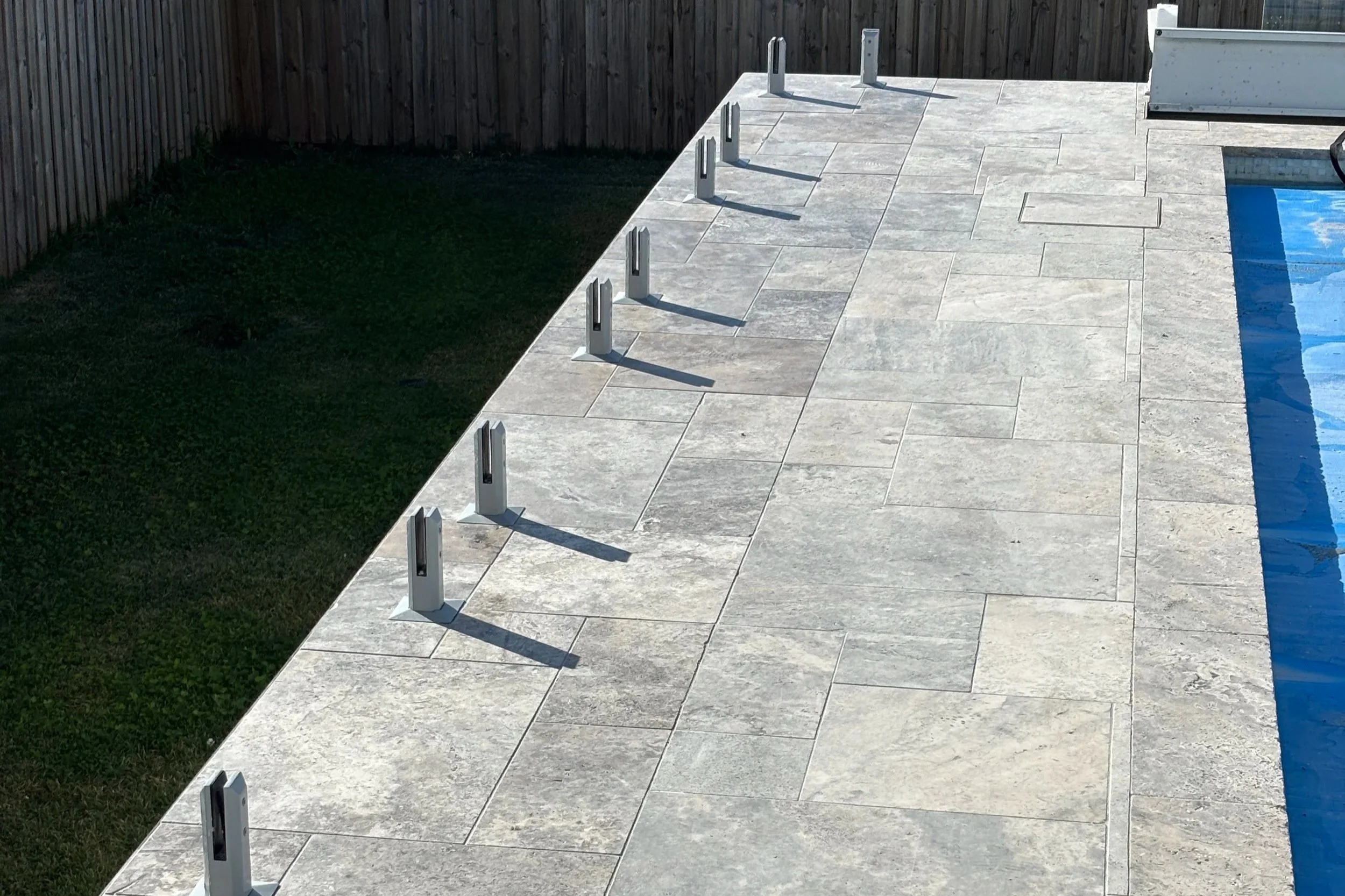
Legally, you have free reign to choose whatever tiles you like for your floors. The Australian Building Code and Australian Standards only mandate slip-rated flooring for stair nosings, stair landings, and ramps, not regular living areas.
That said, just because you can doesn’t always mean you should. Glossy or polished tiles look stunning, but on wet bathroom floors or outdoor areas, they can be dangerously slippery. For safety and practicality, we recommend a minimum P rating of P2 for residential bathrooms, and P3 for outdoor spaces. This ensures your floors are safe to walk on barefoot or in socks, while still giving you plenty of design flexibility.
Wear rating: Tough love for your floors
Wear ratings tell you how tough a tile’s surface is and how well it can handle foot traffic, scratches, and general wear over time.
Here’s the key thing for most homeowners: in a residential setting, wear rating isn’t usually the make-or-break factor. Even using a W1 or W2 rated tile on your floors can easily last decades under normal household use, so long as it's been properly installed.
So, while wear rating gives you an idea of durability, don’t get caught up obsessing over it for a typical home renovation. It’s useful to know, but in most bedrooms, bathrooms, kitchens, or living spaces, the difference between W2, W3, or W4 is rarely noticeable.
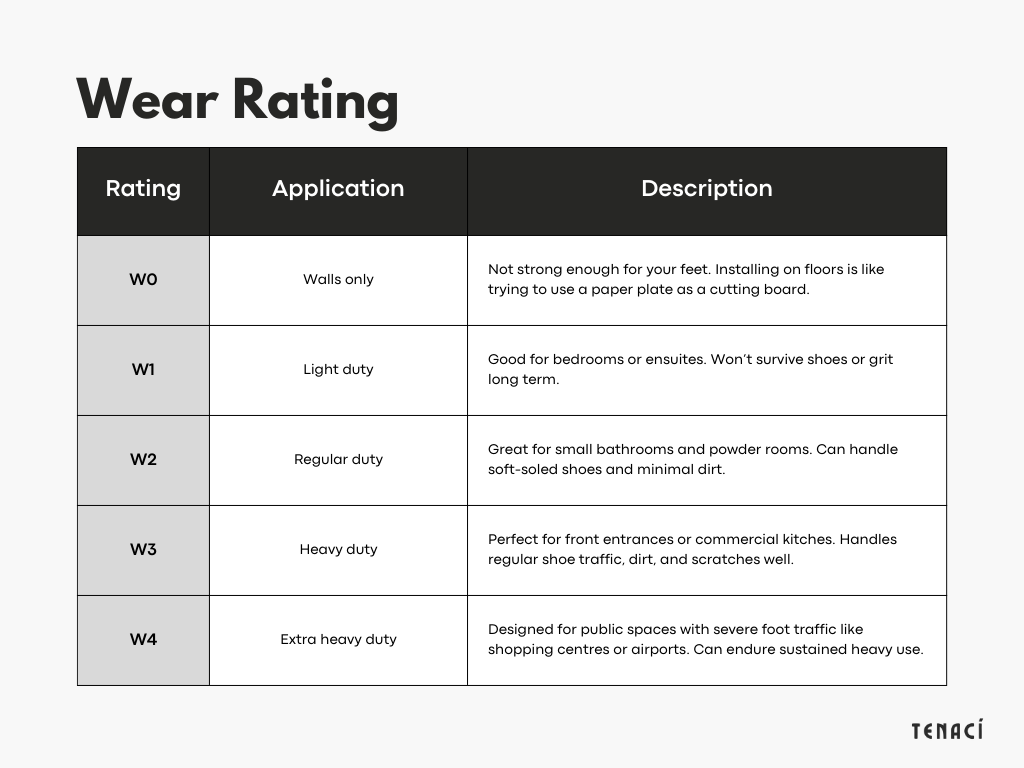
Takeaway for homeowners: focus more on slip resistance, surface texture, and style. Wear rating is a helpful guide, but unless you’re designing a commercial space or high-traffic area, you won’t need the heaviest-duty tiles to enjoy long-lasting floors.
Variation rating: Designing with intention
Variation ratings describe how much the colour, pattern, or texture differs from tile to tile. Understanding this helps you plan your layout and set expectations, especially if you want a consistent look or a more natural, artistic effect.
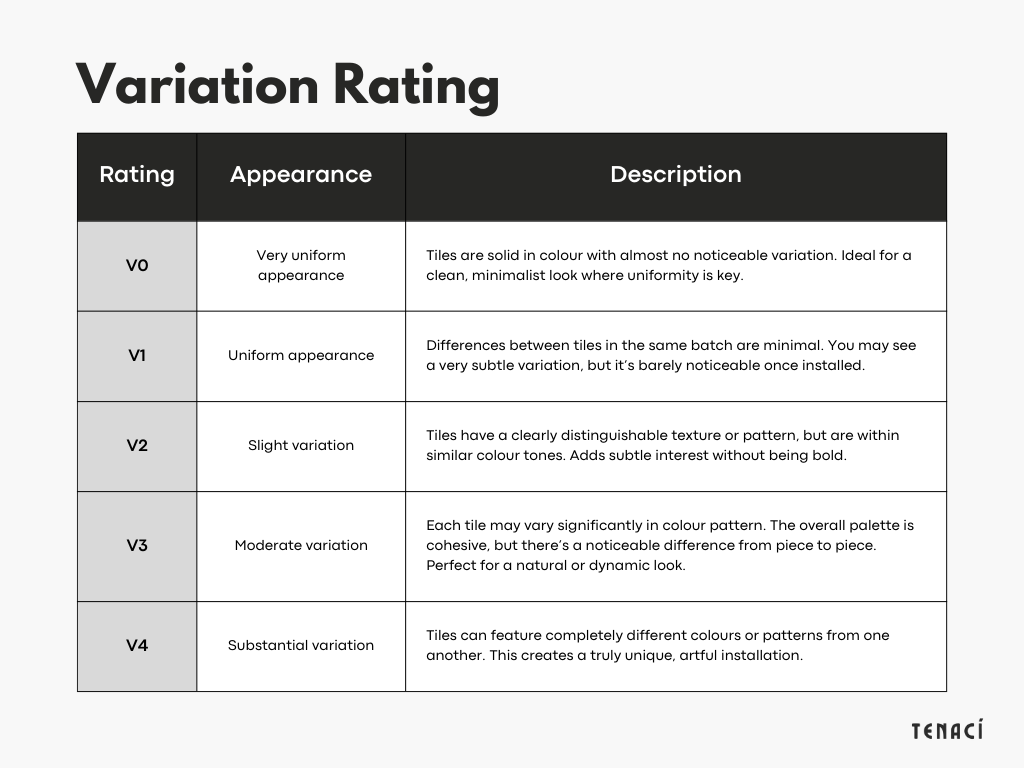
For V3 or V4 tiles, we recommend asking your tiler to dry lay the tiles before installation. This means laying out the tiles on the floor first to see how the variations interact. It helps you balance colours and patterns evenly across the space, ensuring a more intentional, visually pleasing finish.
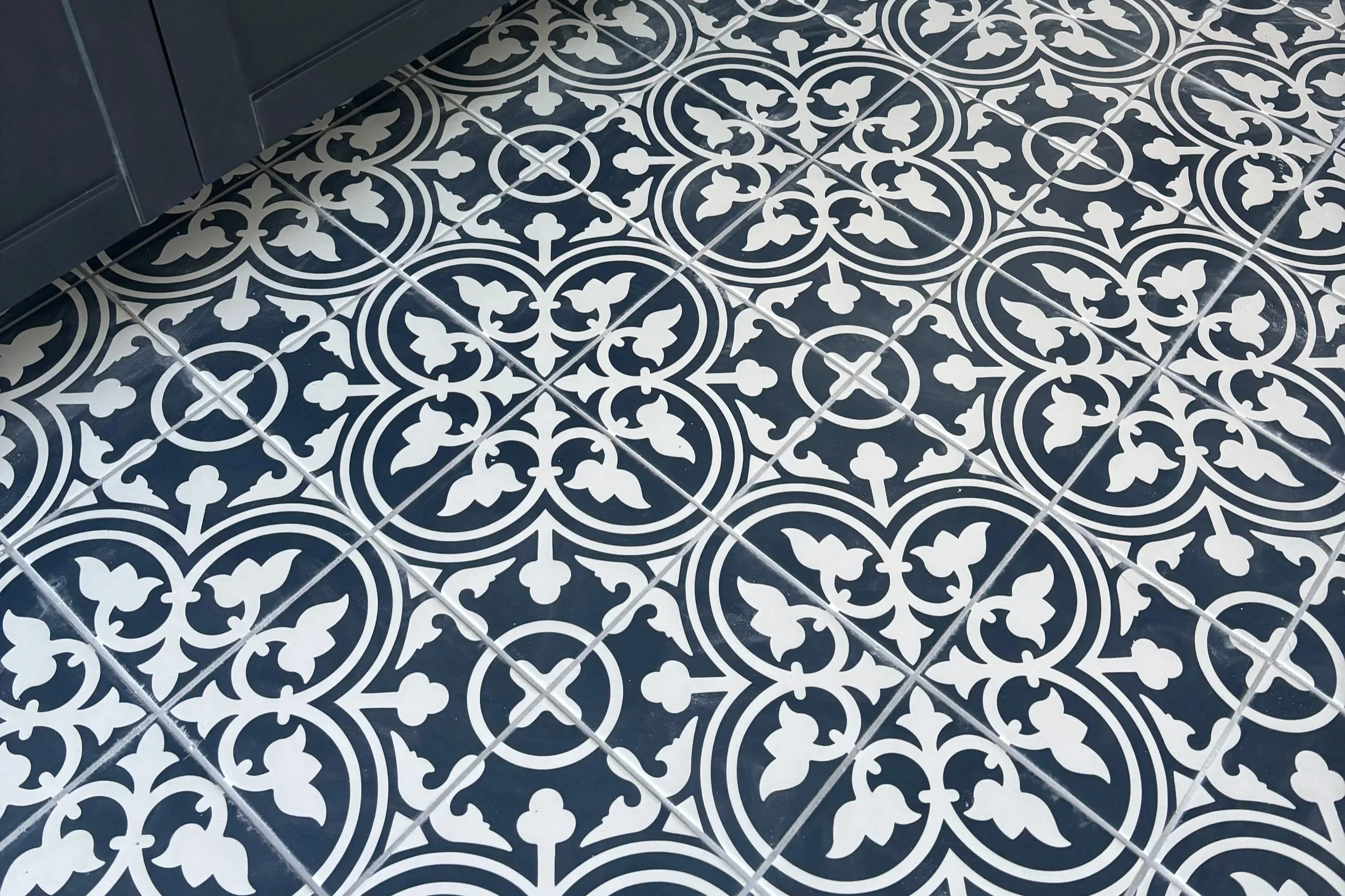
Example of a V1 tile
Revival Celtic Blu 200x200 from National Tiles
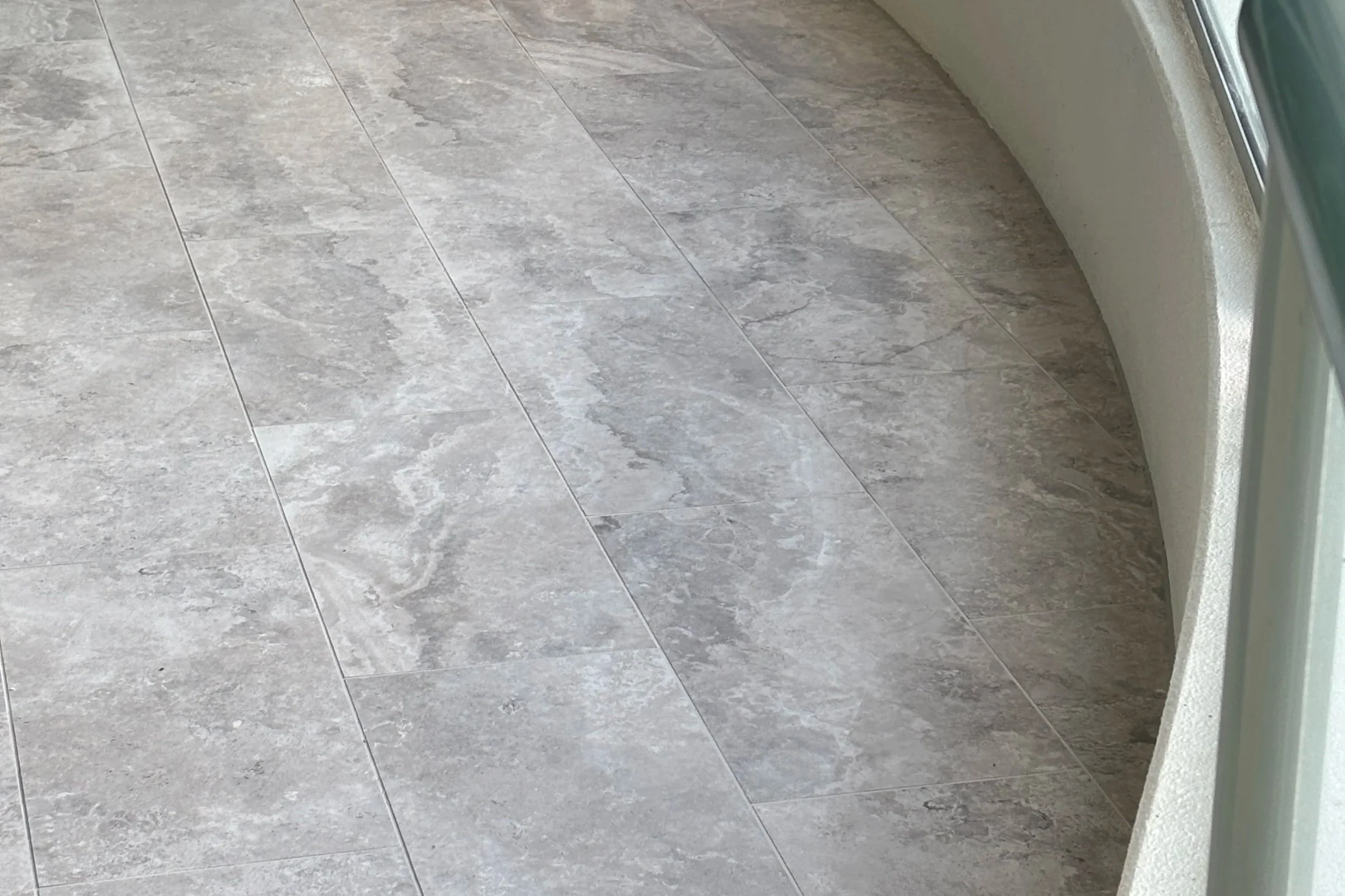
Example of a V3 tile
Pompeii Travertine Tortora 300x600 from Beaumont Tiles
Not ratings, but still important to know
Not everything on a tile label is a “rating”. Some terms you’ll see when choosing tiles aren’t performance ratings at all, but specifications. These describe how the tile is made and finished, rather than how it performs. Two of the most common examples are porcelain vs. ceramic, and rectified vs. non-rectified. While they aren’t ratings, they still play a big role in how a tile performs, how it’s installed, and how much the job can cost.
Porcelain vs. ceramic
Porcelain tiles are made from a finer clay and fired at higher temperatures, which makes them denser and stronger than ceramic tiles. That’s why they’re ideal for floors and high-traffic areas, and why they can handle wet spaces without absorbing much water. They’re extremely versatile and built to last.
Ceramic tiles are made from a softer clay and fired at lower temperatures, making them easier to cut and better suited for walls or light-traffic areas. They are often a more budget-friendly option, but still come in a wide variety of styles to suit your needs.
Rectified vs. non rectified
Rectified tiles are mechanically cut to create perfectly straight edges, which allows for super thin grout lines, often less than 3mm. Less grout means a cleaner look and less maintenance over time, but it also means installation needs to be extra precise. Since the tiling process for rectified tiles tends to be more detailed, labour costs for installing them are usually higher.
Non-rectified tiles, sometimes called cushion-edge or round-edge tiles, have softer edges and require standard grout lines of 3mm or more. Since they undergo less processing and are more forgiving during install, non-rectified tiles are often more cost-effective in terms of both materials and labour.
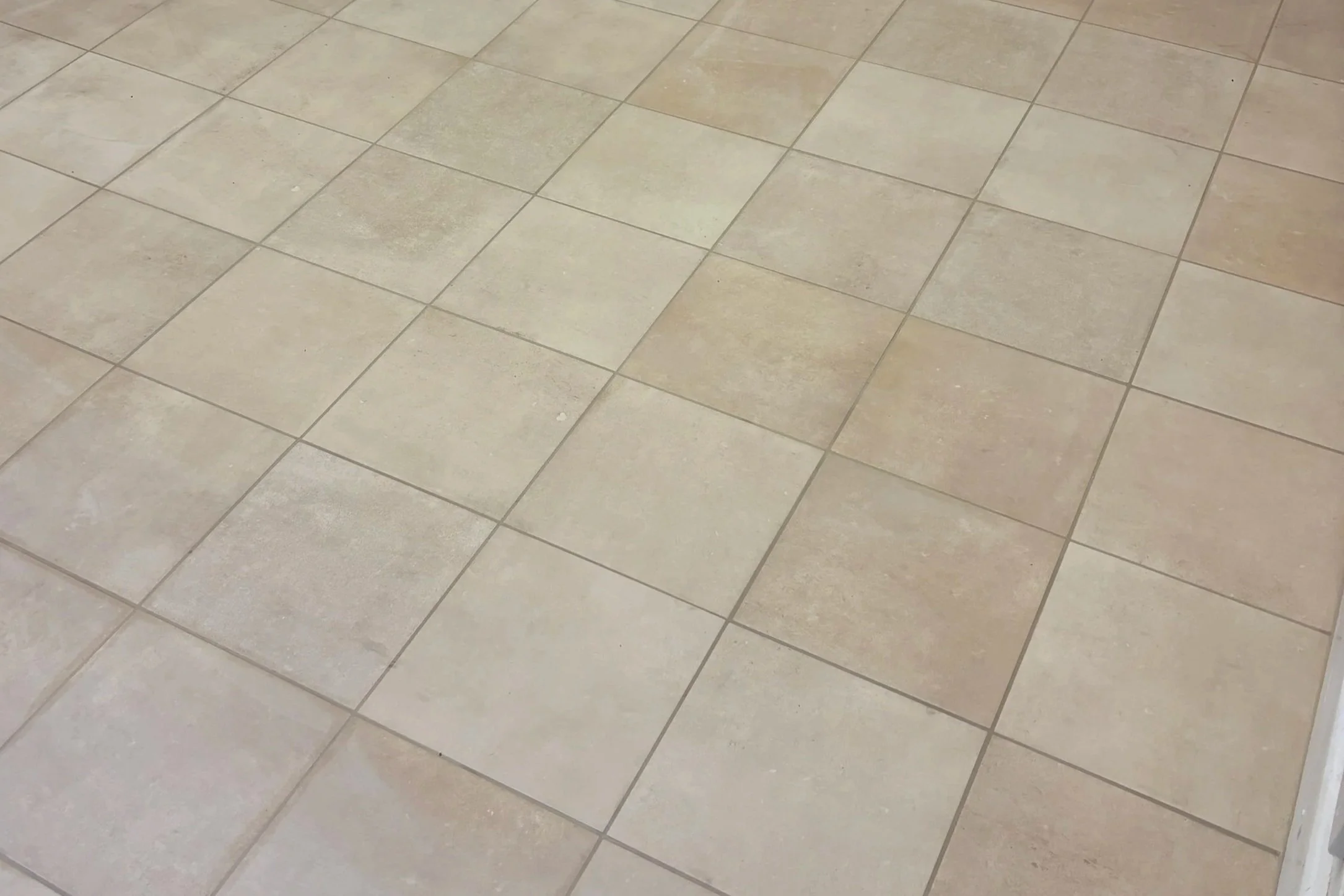
Example of a ceramic, non-rectified tile
Tierre Cotto Creama 300x300 from Beaumont Tiles
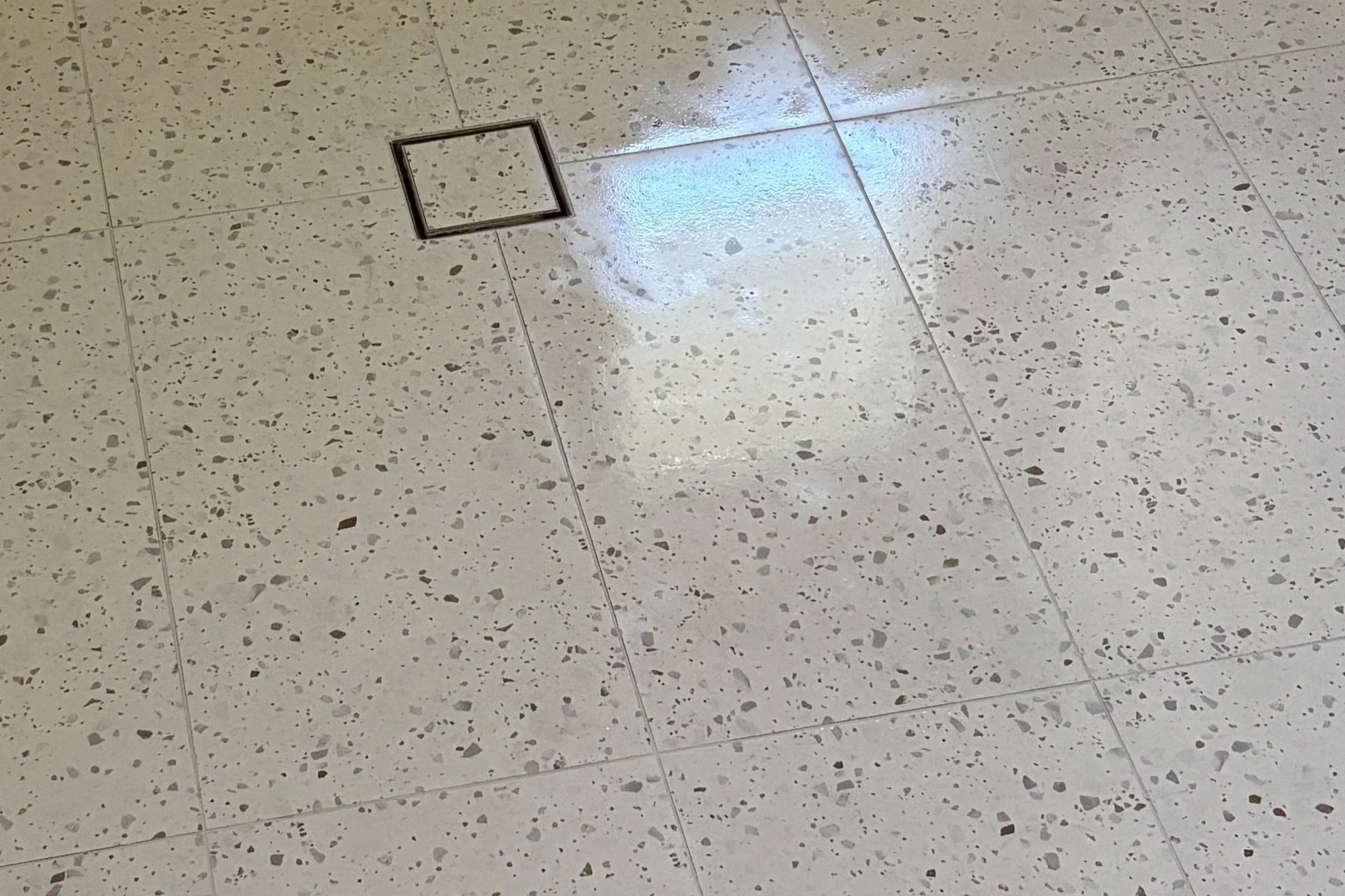
Example of a porcelain, rectified tile
Color Terrazzo 300x600 from Tilemall
Choosing the right tiles isn’t just about picking something that looks nice, it’s also about finding tiles that work for your space and your lifestyle. When you understand tile ratings and specifications, you can choose tiles that are practical and make your space look amazing.
If you’re ever unsure whether a certain tile will work in your space, ask a sales rep at your local tile showroom or your tiler for advice, or you can always ask us! We’d be happy to help you make the right choice.