
Small bathroom, big impact: tile choices that transform compact spaces
A small bathroom doesn’t have to feel cramped. There is a common misconception that a small bathroom limits what is possible from a design perspective. In reality, compact bathrooms often offer the greatest opportunity to create something truly striking.
With less space to work with, every finish becomes more noticeable. Every line, every junction, every material choice carries more weight. And nowhere is that more evident than in tile selection. In fact, with the right tile choices, a compact bathroom can feel open, elevated, and surprisingly luxurious.
Tiles are one of the most powerful visual tools in bathroom design. It controls how the eye moves through the room, how much light is reflected, and whether the space feels seamless or segmented.
When chosen with intention, tiles can completely redefine a small bathroom. Here are the tile decisions that make the biggest difference in a small bathroom.
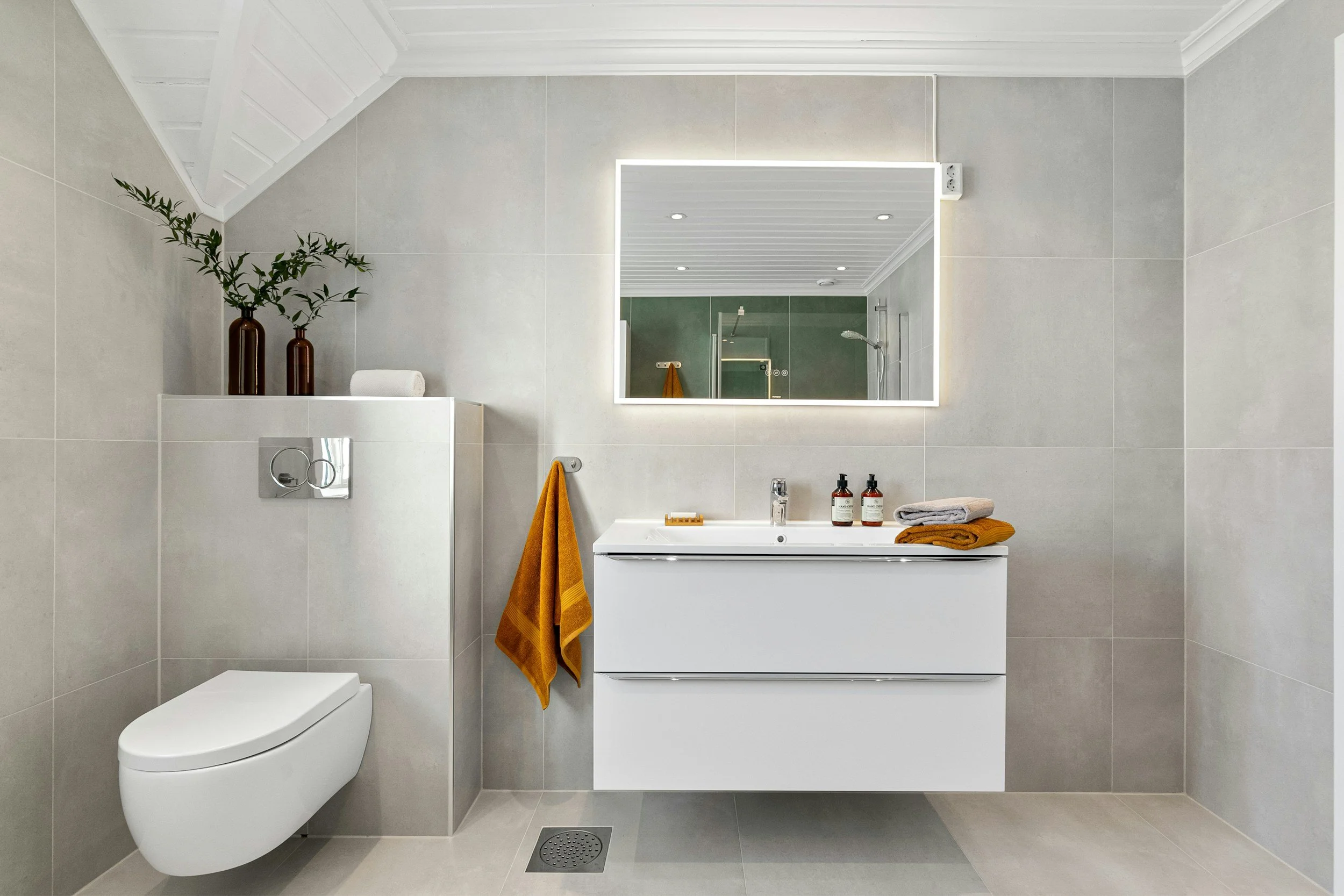
Go larger with your tile format
One of the most common misconceptions in small bathrooms is that smaller rooms need smaller tiles. In reality, large format tiles are often the better choice.
Small tiles introduce more grout joints, more segmentation, and more visual activity which can make a room feel fragmented. Large format tiles, by contrast, create long uninterrupted surfaces that allow the eye to travel freely, with fewer grout lines creating fewer visual interruptions.
The result is a bathroom that feels calmer, more cohesive, and visually more expansive. This is why we frequently recommend larger tile sizes in compact spaces, particularly across floors and primary wall areas.
Think 600x600 or 600x1200, or 300x600 at a minimum.

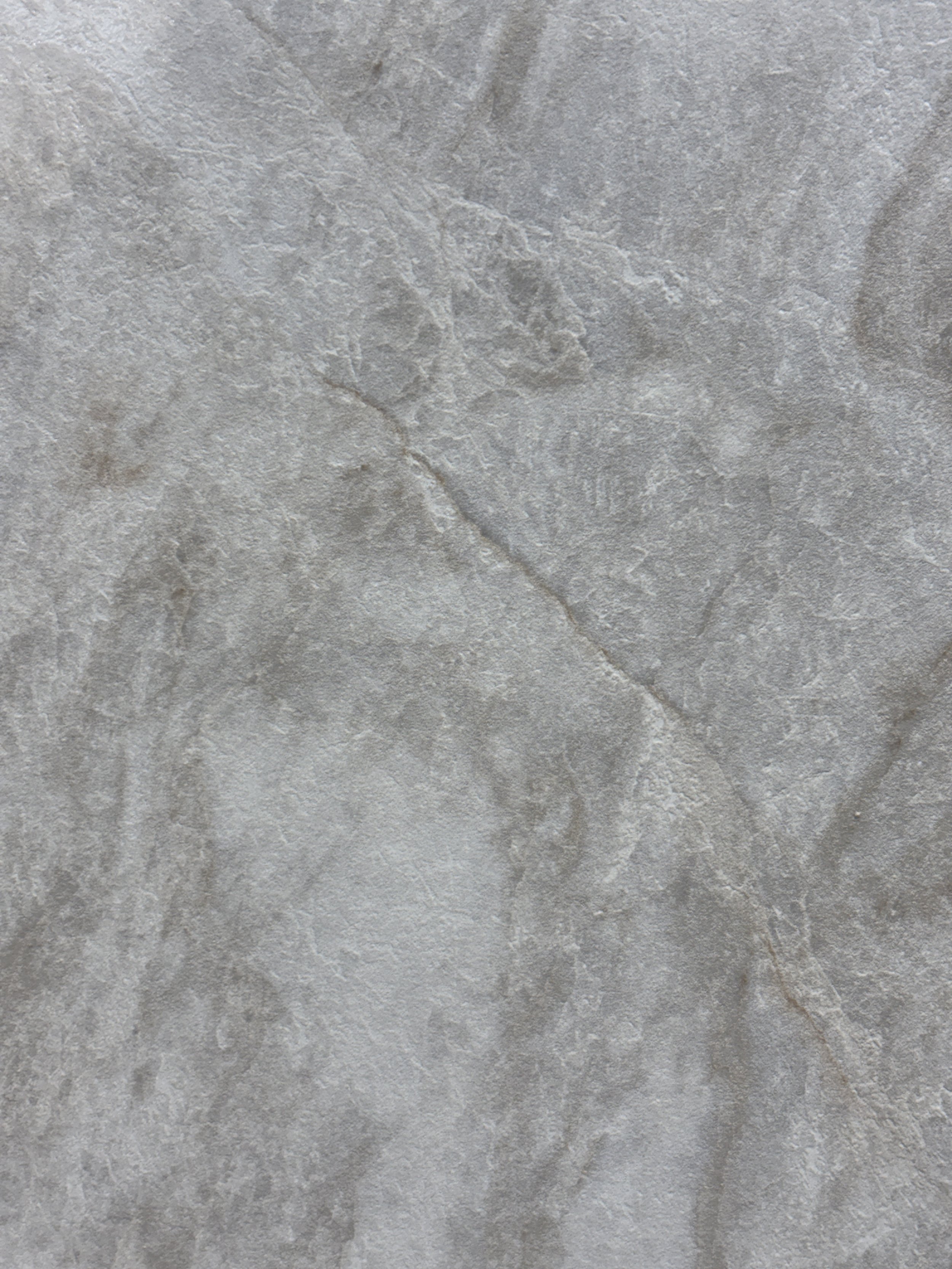
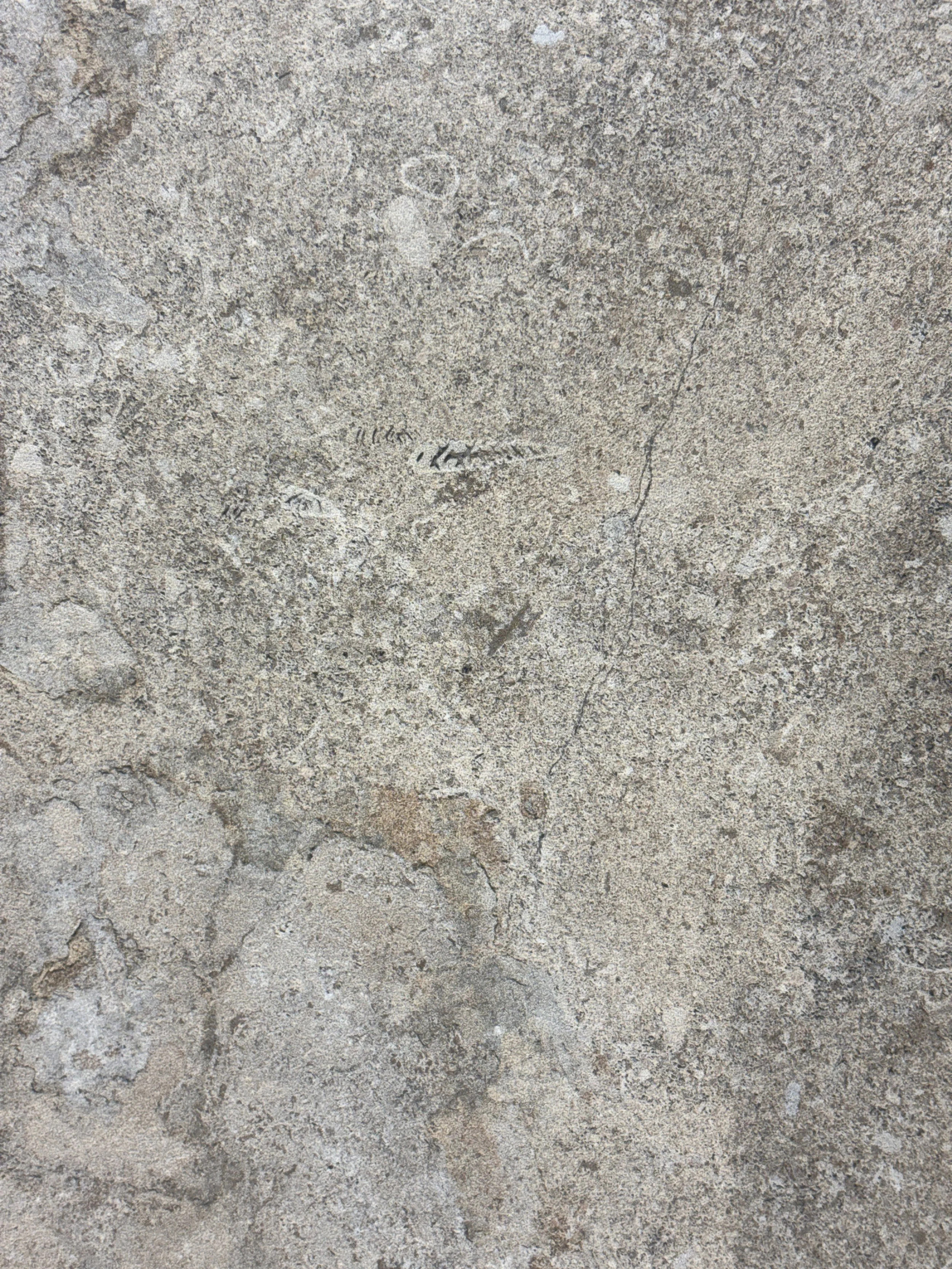
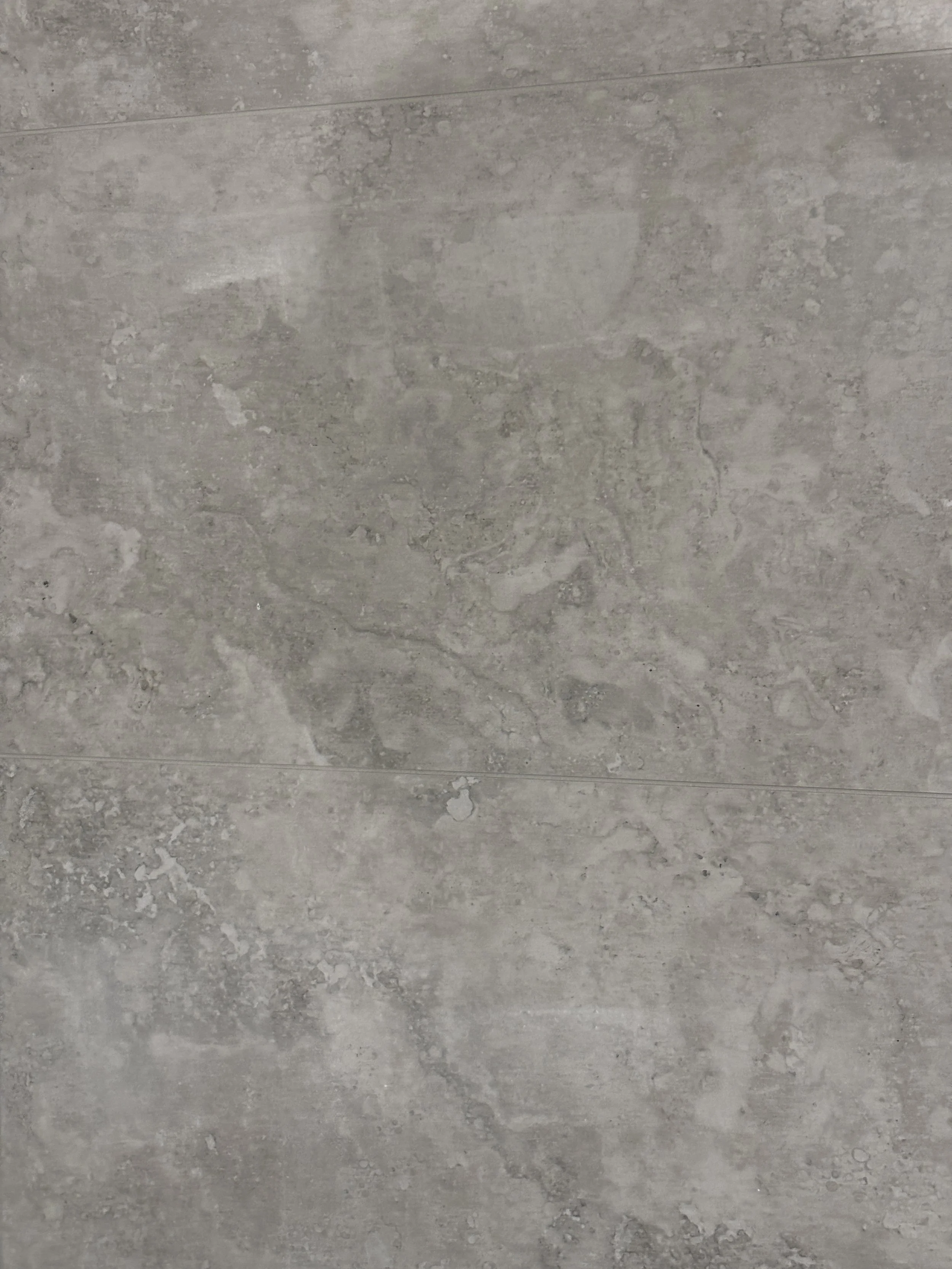
Run the same tile across multiple surfaces
Changing tile from floor to wall, shower recess to niche, may seem like a way to add interest, but in a smaller bathroom too many material transitions can quickly make a room feel fragmented.
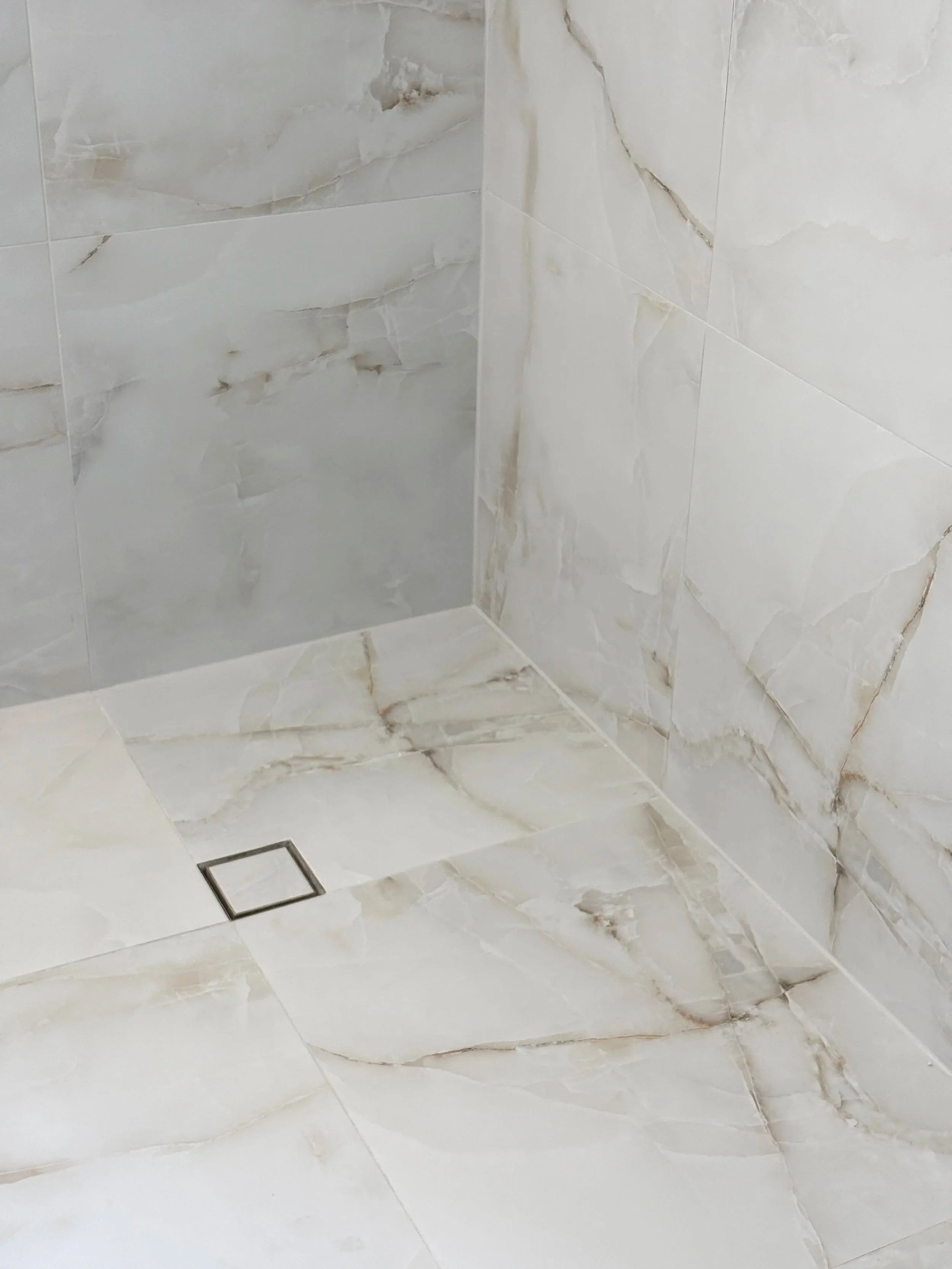
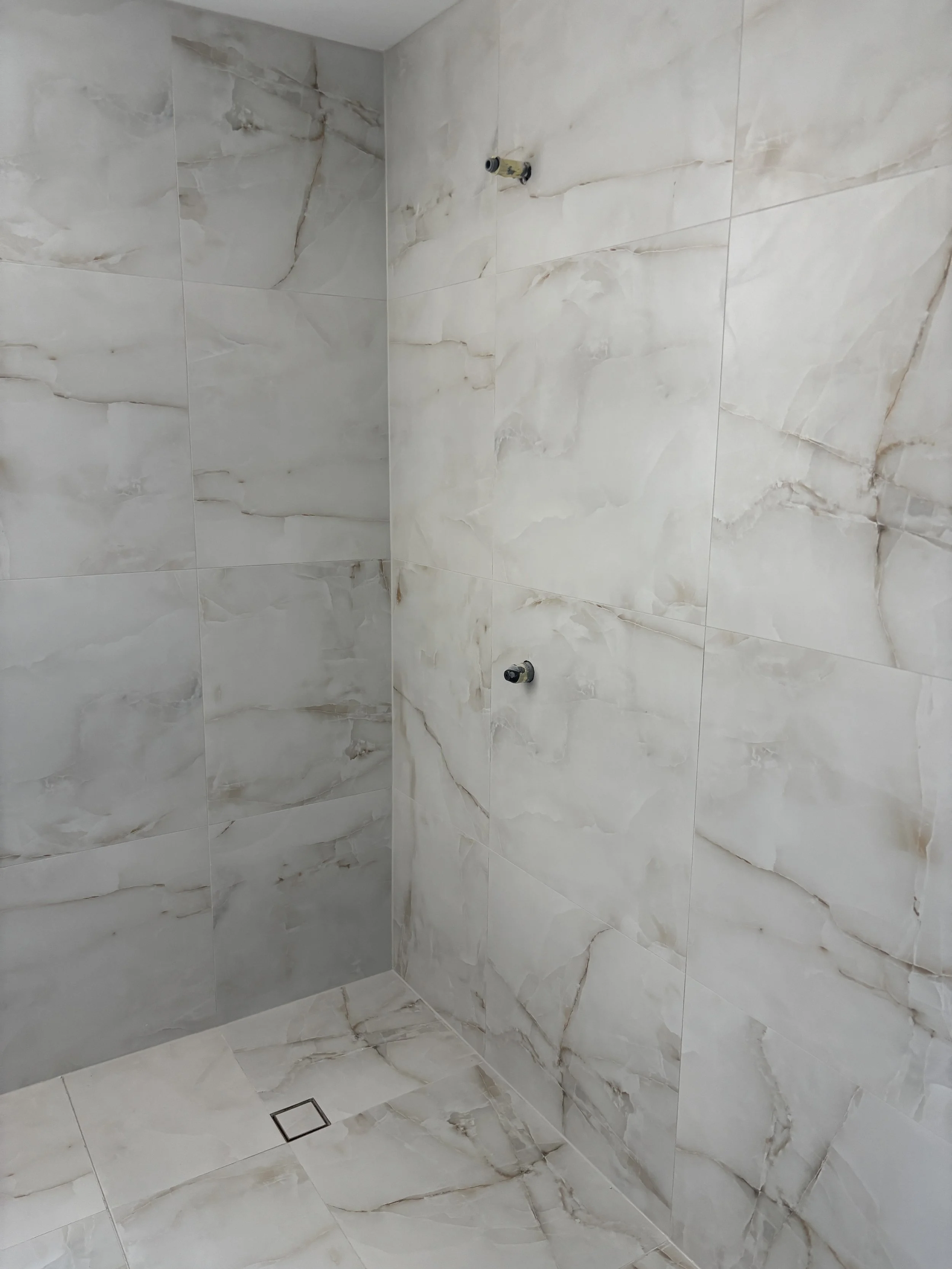
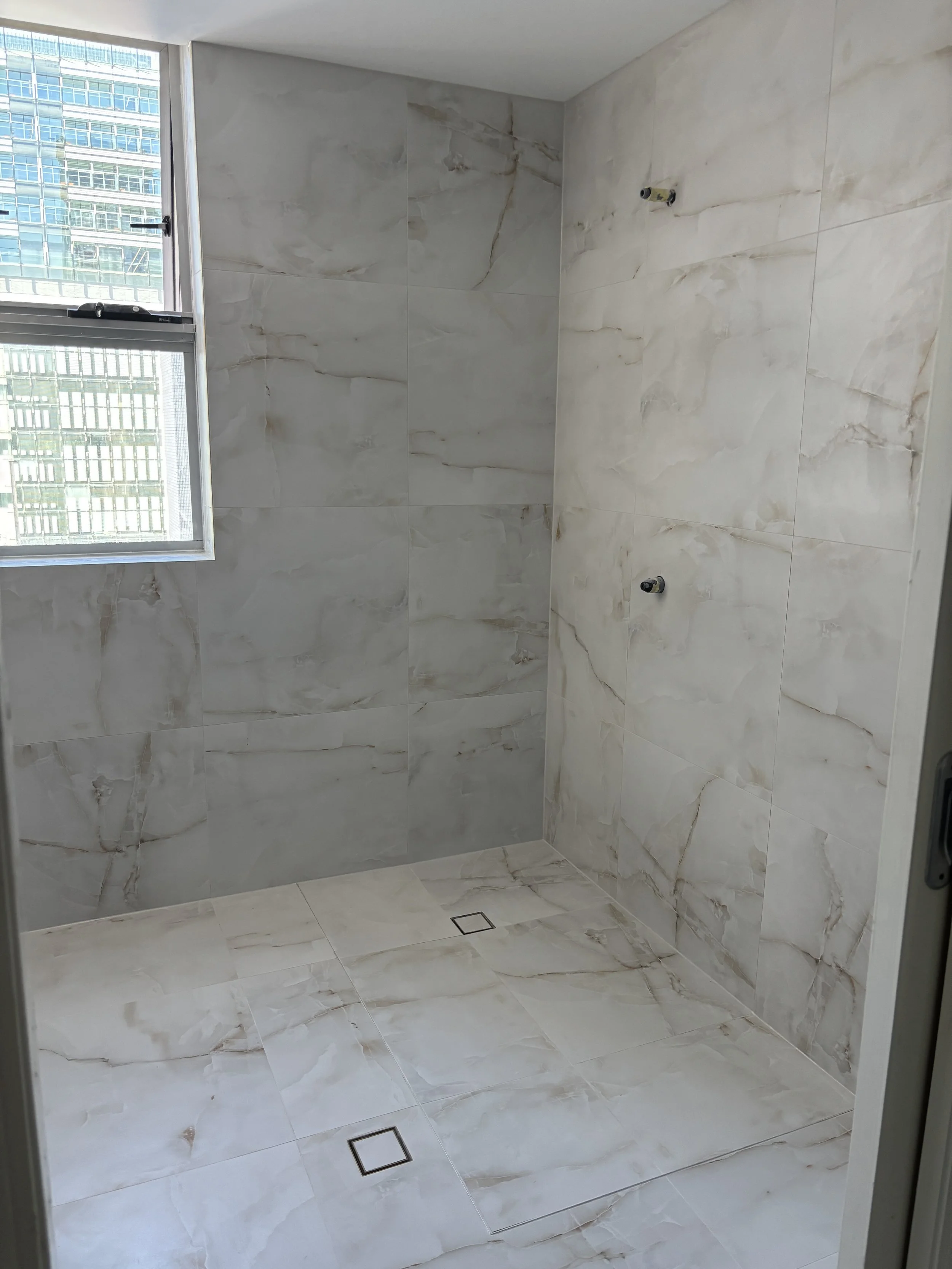
Using one tile to continue across floor and wall, through the shower recess, into niches and returns, creates a visual rhythm that feels uninterrupted and seamless, which is one of the simplest ways to visually enlarge a bathroom.
This creates a visual rhythm that feels seamless and resolved, rather than stop-start. When the eye is not constantly meeting new boundaries, the room naturally reads as larger.
This doesn’t mean the room has to feel boring. Texture can still do the heavy lifting. A small bathroom is a perfect opportunity to play around with the visual and physical textures of a tile to create interest. A softly structured stone-look porcelain, or subtle tonal movement can introduce depth without sacrificing cohesion.
Let light work with the tile
In a compact bathroom, the way a tile handles light becomes just as important as colour or format.
Tiles with a soft sheen, satin finish, or subtle tone variation help bounce available light around the room and prevent the space from feeling too flat. This is especially effective in bathrooms with limited natural light.
You don’t necessarily need high gloss everywhere, but finishes that catch and move light create brightness and depth. Matte tiles can also work beautifully, particularly if the colour remains light and warm.
Use lay patterns to shift proportion
Tile layout matters just as much as tile choice. The way a tile is laid has a direct impact on how the proportions of a room are perceived.
A vertically stacked wall tile can draw the eye upward and create a sense of height. A longer floor tile run through the length of the room can visually extend the footprint.
Even simple stacked patterns often feel cleaner and more spacious than busy offsets or overly intricate layouts in tight footprints.
These decisions may seem minor on paper, but they dramatically influence whether a room feels balanced or boxed in.
Let simplicity feel luxurious
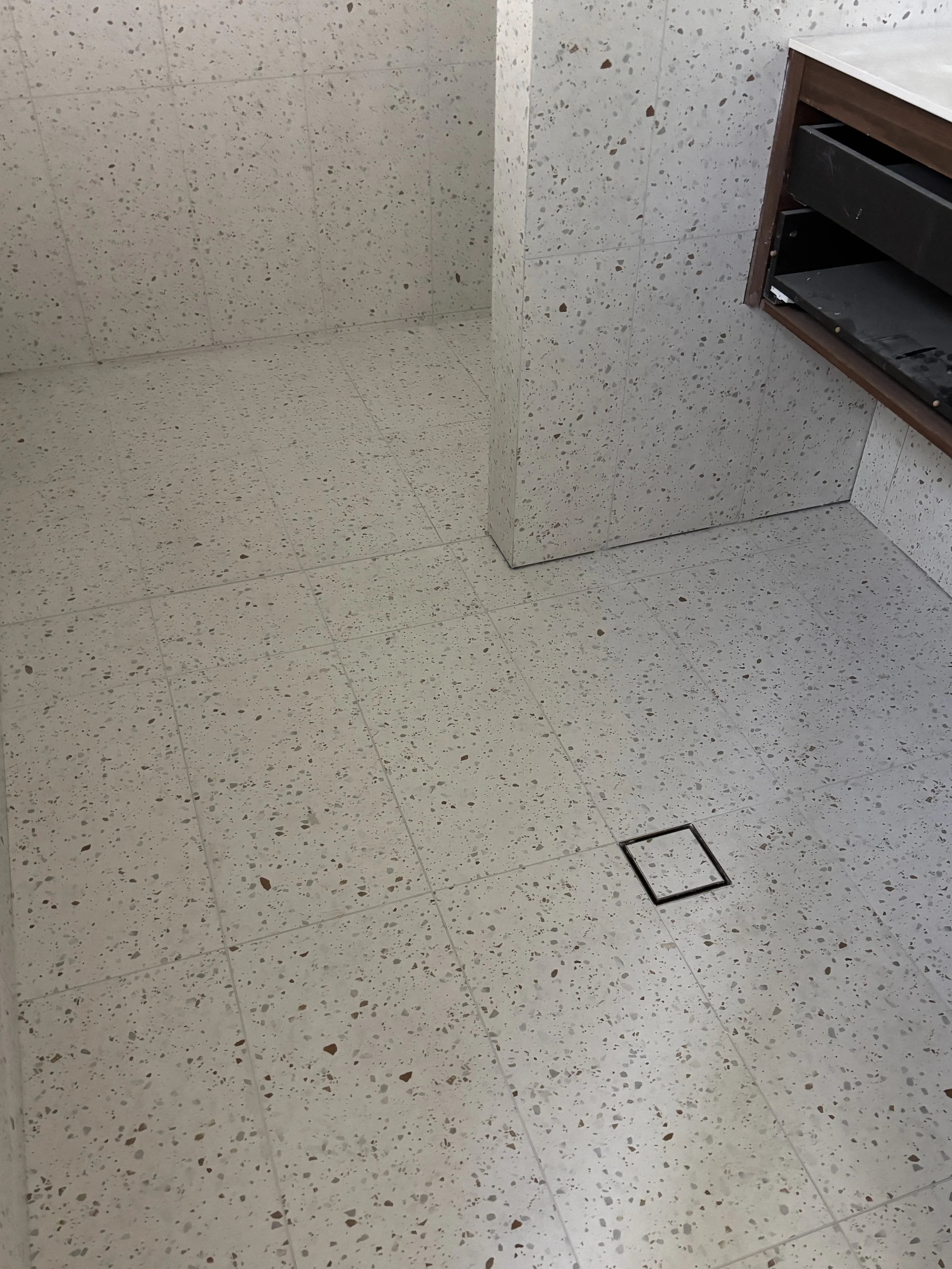
A common temptation with a small bathroom is to try to make it interesting by adding more, but often the most impactful small bathrooms are the simplest.
A cohesive tile palette.
Minimal transitions.
Strong alignment.
Clean finishes.
When the surfaces feel intentional and uninterrupted, the room instantly feels larger and far more sophisticated. In smaller spaces, restraint is often what creates the strongest impact.
A small bathroom may have limited square meterage, but it still has enormous design potential. The right tile format, grout choice, layout, and finish can completely shift the way that space feels.
Planning a bathroom renovation? We can help guide tile choices that not only look beautiful, but make your space work harder. Let’s talk.
